Course Content
Shape the power industry of the future!
We humans take it for granted that we will always have access to energy. At any time, in unlimited quantities and almost anywhere. The future of our energy supply lies in renewable energies such as wind power, geothermal energy or solar energy. In the Energy Systems Engineering degree programme at the European Campus Rottal-Inn in Pfarrkirchen, you will be trained as an engineer for energy systems technology and deal with energy generation, conversion, storage, use and transport. This enables you to shape the change in the energy supply system away from fossil raw materials as an energy source towards renewable energies. With your help, for example, new supply concepts are created, you deal with decentralised energy systems, you ensure the security of the energy supply or further develop the intelligent power grid. Everything for a more sustainable and environmentally friendly energy industry.
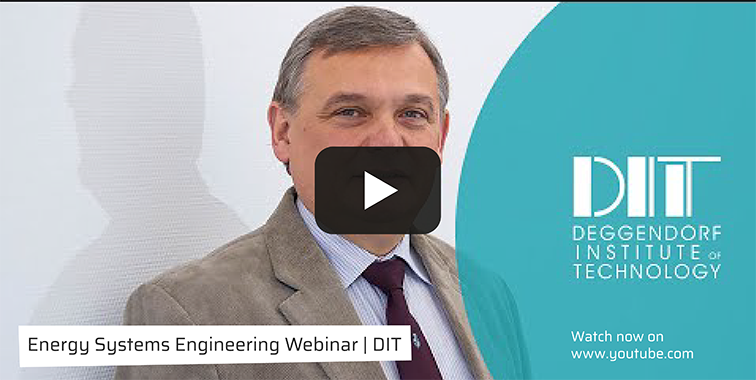
Professor Mátéfi-Tempfli describes the Energy Systems Engineering programme in a webinar
details & Downloads

Subject Overview
Overview of the courses (From the Study and Examination Regulations), Weekly Semester Hours (SWS) and ECTS (European Credit Transfer and Accumulation System) for the Bachelor's degree Energy Systems Engineering.
Career Prospects
In the past, our natural world and environment have been severely strained in the pursuit of electricity generation. Ever since the German Federal Government’s decision on the energy transition in 2011, the energy sector has been called upon to gradually transform its system. As an energy systems engineer, you are in high demand here. Whether as a civil servant, working for energy supply companies, in industry or in engineering consultancies – there are many challenges awaiting you that you can help drive forward: you can play a part in the development of new wind and solar farms, as electricity generation from conventional sources is declining and being phased out gradually. Smaller, decentralised sources must therefore feed increasingly more electricity into the grid, such as households with photovoltaic systems.
As a result, we need a smart grid to distribute energy more effectively. The electricity grid must be further expanded and modernised to meet the new demands posed by renewable energy. This also means that more storage capacity must be made available for the existing energy so that it can be accessed when needed.
A degree in Energy Systems Engineering will equip you to tackle all these challenges. In the first few semesters, you will acquire essential foundational knowledge in subjects such as chemistry, physics and electrical engineering. Computer science is also a key component of the curriculum, as digitalisation and artificial intelligence will play a major role in the energy supply networks of the future. From the third semester onwards, you’ll delve fully into the subject matter. Subjects such as renewable energy, sustainability, energy network technology and energy storage, combined with several practical projects, will prepare you perfectly for your career. As a graduate of this degree programme, an international career is also open to you. All subjects are taught in English.